
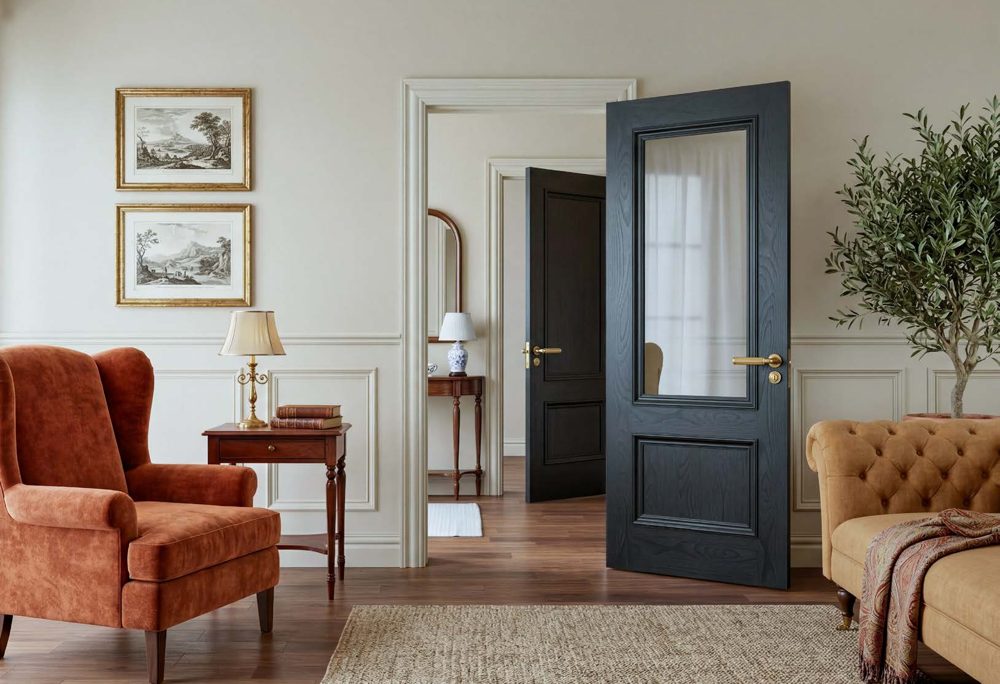
The right internal doors can make a period home feel finished, and the wrong ones can feel quietly off. The good news is that the key differences between Victorian, Edwardian and 1930s doors come down to panel layout, and once you know what to look for, matching them is straightforward.
Victorian doors
Victorian homes typically have panelled doors, most often four panel or six panel designs, with the larger panels at the top and smaller ones lower down. They suit tall ceilings and decorative skirting and architrave, and look right painted white or in deeper period colours.
Edwardian doors
Edwardian doors are lighter and simpler than Victorian ones. Many have fewer panels, and some have a glazed upper section. If you are choosing four panel doors, the panel arrangement is the clue: the smaller panels at the bottom point to Victorian, while a different balance leans Edwardian.
1930s doors
1930s doors have a distinctive look inspired by the Art Deco era: simple geometric panelling, often a single glazed or flat panel in the upper half with vertical panels below. They suit the semis and bungalows built between the wars and look excellent in oak or white.
Panel patterns at a glance
| Period | Typical pattern | Best finish |
|---|---|---|
| Victorian | Four or six panel, with a decorative profile | White or period colours |
| Edwardian | Simpler panels, sometimes glazed | White or natural wood |
| 1930s | Geometric, one upper panel with vertical panels below | Oak or white |
Traditional doors worth a look


Also worth a look: 4P Flat Panel.
Period look, modern performance
Modern doors can look authentic and still bring practical benefits: solid core construction for a quality feel and better sound control, and fire-rated options where the building needs them. If you are converting a loft, a fire door may be required on the stairs, so ask us before you order and we will help you find a traditional design with the right rating.
Finishing touches
- Choose brass, black or antique-style handles to suit the age of the house.
- Keep doors consistent on one floor so the house feels cohesive.
- Keep original skirting and architrave where you can, and paint them to match for a clean, integrated look.
Talk to us about your period home
If you are not sure which pattern suits your home, send us a photo or visit our showrooms in Devon and Dorset. We can also send free samples. Call us on 01202 872211, Monday to Friday, 8:30 to 5:30.
Share:
Contemporary internal doors: flush, shaker and ladder styles explained
Black internal doors: how to style them in every room